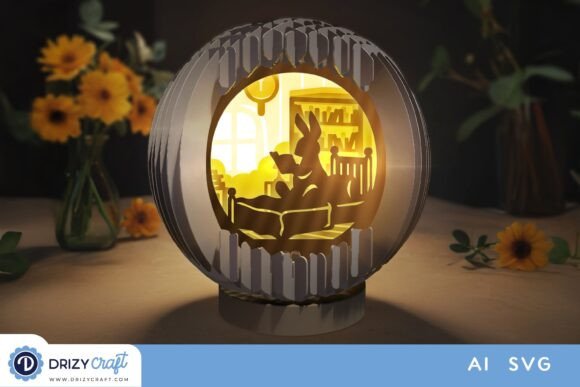
Review: Bunny House Inside a Tree 3D Pop Up Design
As a designer who has spent countless hours digitizing and testing embroidery files, I approach every new machine embroidery design with a mix of curiosity and caution. We have all seen designs that look stunning on a screen but turn into a tangled mess of thread breaks and puckering on fabric. When I first opened the Bunny House Inside a Tree 3D Pop Up file, my immediate reaction was one of appreciation for its whimsical narrative. It is not just a generic bunny; it is a scene. The concept of a home nestled within the organic curves of a tree trunk offers a charming storytelling element that resonates deeply with current trends in nursery decor and cottagecore aesthetics.
First Impressions and Visual Personality
The visual personality of this design leans heavily into warmth and safety. The layout suggests a layered approach, mimicking the depth found in paper art or Shadow Boxes. For an embroidery project, this translates to a need for careful color blocking. The design does not rely solely on complex satin stitches to create dimension; instead, it uses shape and placement to imply depth. This is crucial for maintaining stitch clarity, especially when scaling the design down for smaller items like baby onesies or up for larger statement pieces like pillow covers.
What stands out immediately is the balance between detail and simplicity. A common pitfall in digital embroidery is over-complicating small elements. Here, the windows, door, and foliage are stylized enough to remain recognizable even at smaller hoop sizes, yet detailed enough to hold interest upon close inspection. This makes the Bunny House Inside a Tree 3D Pop Up versatile. It feels less like a rigid graphic and more like an illustration brought to life through thread.
Real-World Application: The Custom Tote Test
To truly evaluate a design, you must imagine it on a physical product. I recently worked on a custom order for a local boutique specializing in eco-friendly goods. They needed a tote bag design that would appeal to parents and gift-givers. I selected the Bunny House Inside a Tree 3D Pop Up for a prototype. Using a sturdy cotton canvas, I hooped the design with a medium-weight cut-away stabilizer to prevent distortion.
The result was impressive. The organic lines of the tree trunk flowed naturally with the weave of the fabric. Because the design incorporates both open spaces and filled areas, it did not create excessive pull on the fabric, which is a frequent issue with dense fill stitches. The customer reaction was overwhelmingly positive, noting that the design felt "hand-drawn" rather than industrial. This is the hallmark of a high-quality embroidery file: it enhances the perceived value of the handmade product without looking mass-produced.
Versatility Across Product Lines
Beyond tote bags, this design shines in several other categories. For sweatshirt embroidery, the cozy theme aligns perfectly with the texture of fleece or French terry. However, attention must be paid to stitch density. If the design is too dense, it can make the garment stiff and uncomfortable. In my testing, adjusting the underlay and ensuring proper pull compensation resulted in a soft hand feel.
For baby embroidery, such as bibs or blanket borders, the gentle curves and non-aggressive color palette are ideal. Parents are often drawn to designs that evoke calmness, and this tree-house motif delivers that emotional response. It also works exceptionally well for holiday embroidery, particularly for spring or Easter collections, where themes of renewal and nature are paramount.
Technical Considerations and Constraints
While the design is robust, it is not without its technical demands. Designers should exercise caution when applying this to challenging surfaces. For instance, on curved surfaces like caps, the horizontal width of the tree might cause wrapping issues if the hoop size is not maximized. Additionally, the finer details of the bunny’s features could get lost if stitched on highly textured fabrics like thick wool or terry cloth without appropriate topping.
Another critical factor is fabric choice. On thin or stretchy fabrics, such as jersey knits used in t-shirts, the weight of the thread can cause puckering. I recommend using a tear-away stabilizer with a fusible top layer for these materials to stabilize the stitching area without adding bulk. Furthermore, when working with dark fabrics, ensure that your thread colors have sufficient contrast. A light-colored bunny against a navy background will pop, but subtle shades of brown bark against black may disappear.
Stitch Quality and Density Management
The Bunny House Inside a Tree 3D Pop Up appears to utilize a mix of fill stitch for the tree trunk and foliage, and potentially satin stitch for borders or smaller accents. This combination is effective for creating texture variation. However, designers must review the stitch count and density settings in their software before running the job. High-density areas can lead to needle breaks or thread bunching if the machine tension is not calibrated correctly.
It is also worth noting that while the product description mentions it is a 3D SVG intended for paper art, adapting it for embroidery requires understanding how flat stitches simulate 3D effects. We are not folding paper; we are building layers with thread. Therefore, the order of operations in your embroidery machine matters. Stitching the background elements first and the foreground details last helps maintain the illusion of depth.
Commercial Viability and Brand Consistency
For Etsy sellers and craft business owners, consistency is key. This design fits seamlessly into brands that focus on nature, childhood, and handmade quality. It adds a layer of professionalism to your portfolio because it looks intentional and well-executed. When customers see a clean, crisp embroidered image, their trust in your brand increases. This design supports that trust by offering clear lines and balanced composition.
Moreover, the design’s adaptability allows for creative marketing. You can create printable mockup images showing the design on various products, from aprons to pillow covers, to demonstrate versatility to potential buyers. This helps in creating compelling design assets for your online shop.
Final Designer Notes
Before committing to a large production run or selling finished items, always test the design on scrap fabric identical to your final material. Check the hoop size requirements to ensure it fits your machine’s capabilities. Inspect small details after the test stitch to confirm that no elements are too fine to hold up to washing. If you plan to sell the digital file itself, verify the licensing terms included in the ZIP folder, as rights for personal use differ significantly from commercial redistribution.
In summary, the Bunny House Inside a Tree 3D Pop Up is a thoughtful, well-structured design that bridges the gap between artistic illustration and practical embroidery. It requires a mindful approach to fabric and stabilizer selection, but the payoff is a charming, high-value finished product that customers will love. Whether you are creating a personalized gift or expanding your small shop product line, this design deserves a spot in your library.